
Manual Handling Training for Warehouse and Logistics Workers
Free online manual handling training and assessment. Pay A$49 for your Certificate of Completion only when you pass.
- 100% online, on your phone, tablet or computer
- Written for warehouse, distribution centre, freight and delivery work
- Complete at your own pace, between shifts if you need to
- Online assessment included
- Instant certificate after successful completion and payment
Content last reviewed September 2026.
100% Online
Complete the training using your phone, tablet or computer, at any hour that suits your roster.
Built for Warehousing and Freight
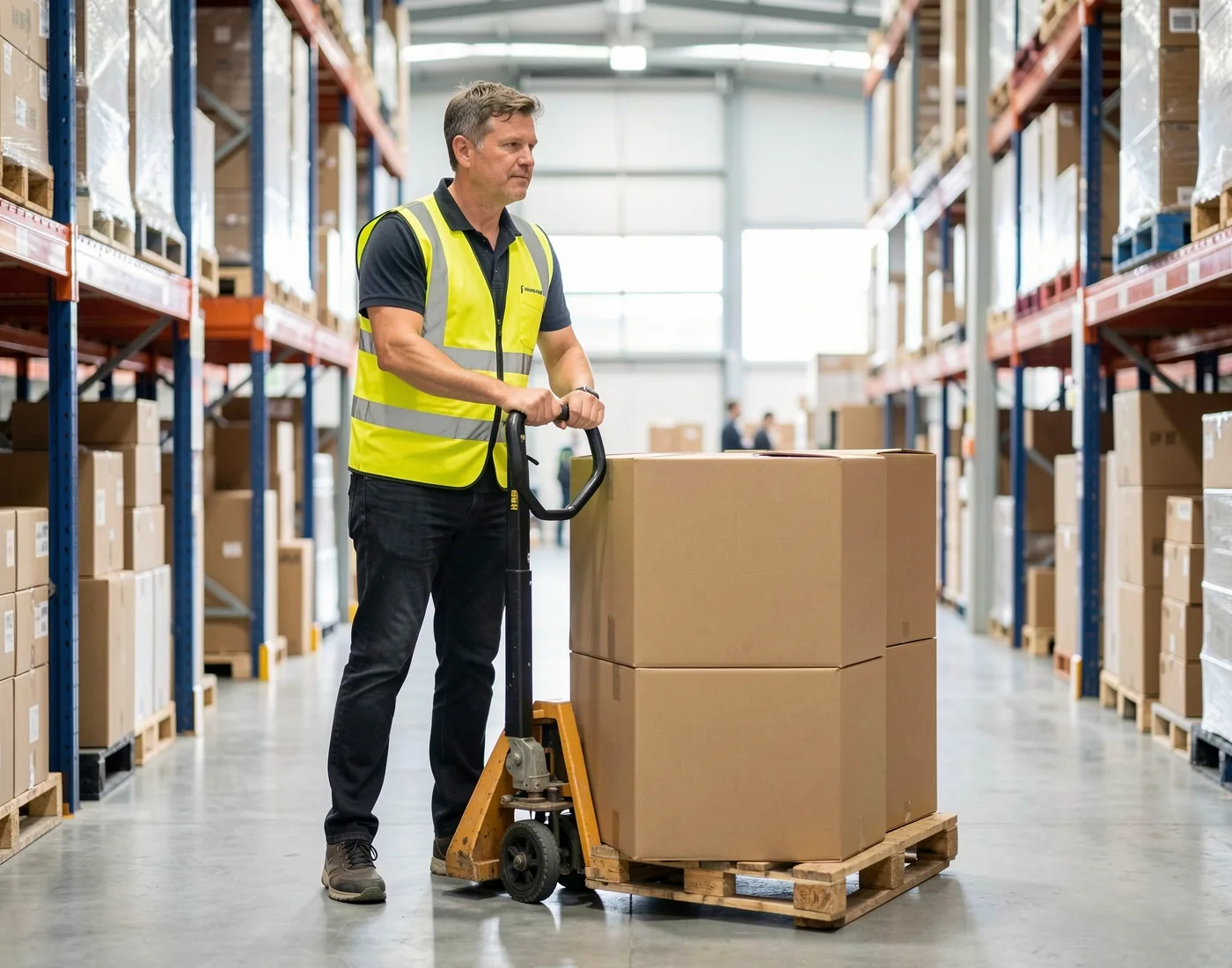
Picking, palletising, pallet jacks, roll cages, containers, tail lifts and kerbside deliveries — not generic office lifting.
Online Assessment
Twenty scenario-based questions drawn from the eight modules, with unlimited retries.
Certificate of Completion
Download your certificate after passing and paying A$49. Every certificate carries a unique number an employer can verify.
Who Is This Training For?
This course is designed for people working, or about to start work, in Australian warehouses, distribution centres, freight depots, cold stores, postal and parcel networks and delivery fleets — whether directly employed, casual or placed through a labour-hire agency.
Pickers and Packers
Order picking, packing benches, sort lines and palletising in DCs and supermarket distribution.
Storepersons and Dock Staff
Receiving, put-away, replenishment, container unloading and loading dock work.
Drivers and Couriers
Van and truck deliveries, tail lifts, roll cages, kerbside and customer-premises handling.
Forklift Operators
The manual tasks around the forklift — wrapping, strapping, hand-stacking and dock work. Not a licence course.
3PL and Cold Storage
Third-party logistics, cold rooms and freezers, where gloves, frost and shift work change the risk.
Labour-Hire and Casual Workers
Onboarding evidence for agency, casual and seasonal peak workers starting at a new site.
This training supports safe work knowledge. It does not guarantee employment and is not a forklift or high-risk work licence.
Why Manual Handling Matters in Warehousing and Logistics
Transport, postal and warehousing is consistently among the Australian industries with the highest rates of serious injury claims, and muscular stress from lifting, carrying, pushing and pulling is the largest single cause. Almost none of it comes from one heroic lift. It comes from cartons picked from floor level hundreds of times a shift, roll cages pulled over dock lips, containers unloaded by hand in the heat and parcels carried up stairs at the end of a twelve-hour run.
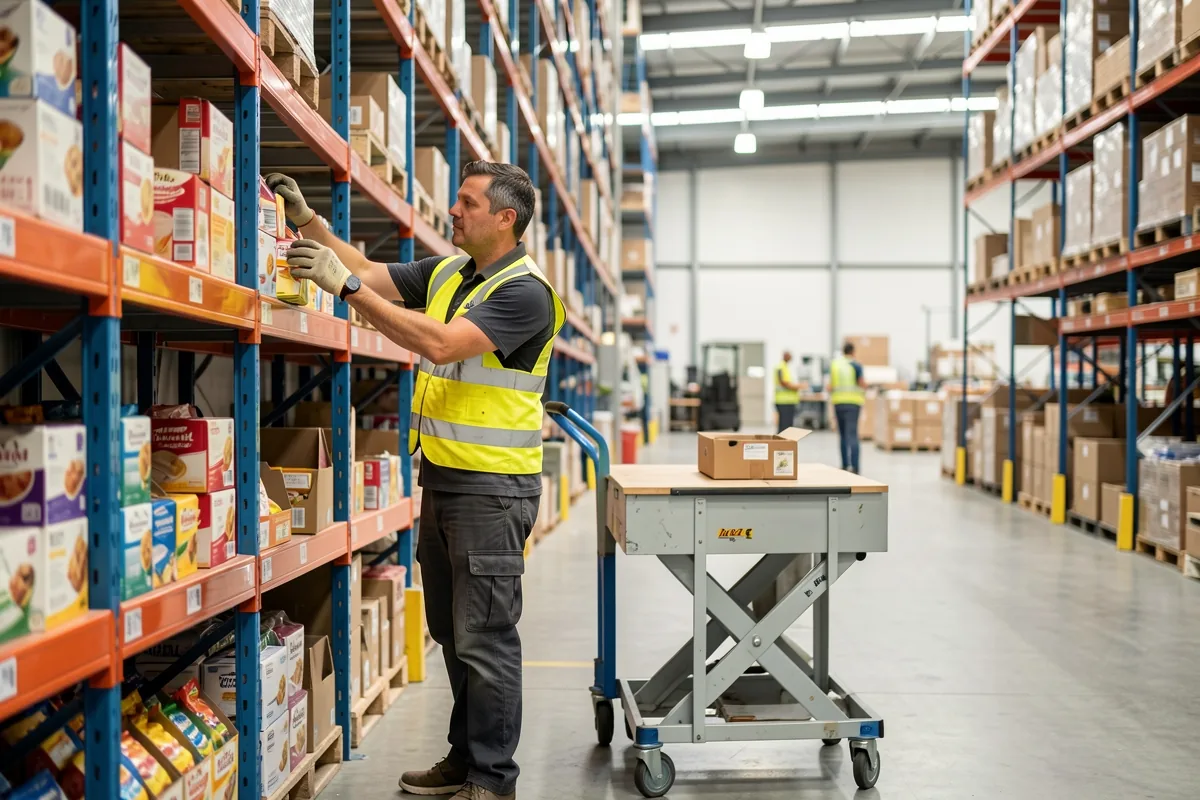
- Picking cartons from pallets, shelves and flow racks
- Packing and lifting cartons onto conveyors
- Building, wrapping and breaking down pallets
- Pushing and pulling pallet jacks and roll cages
- Unloading shipping containers by hand
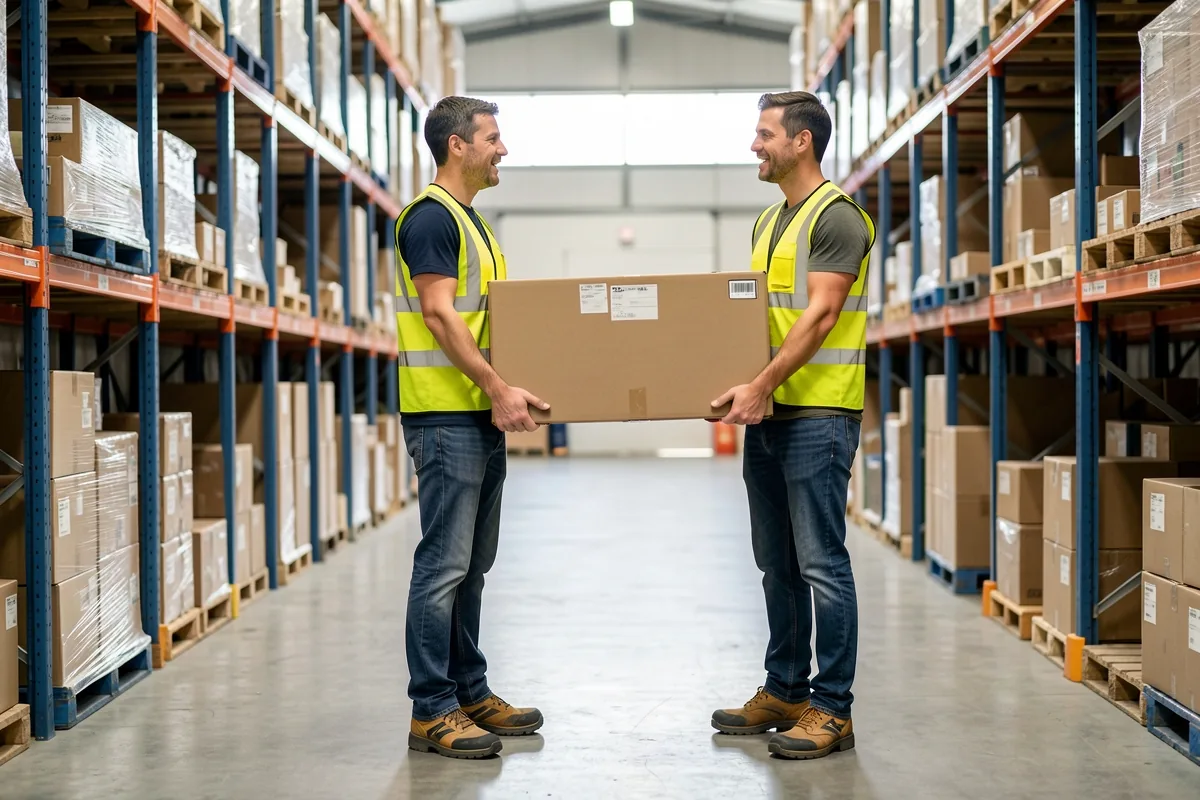
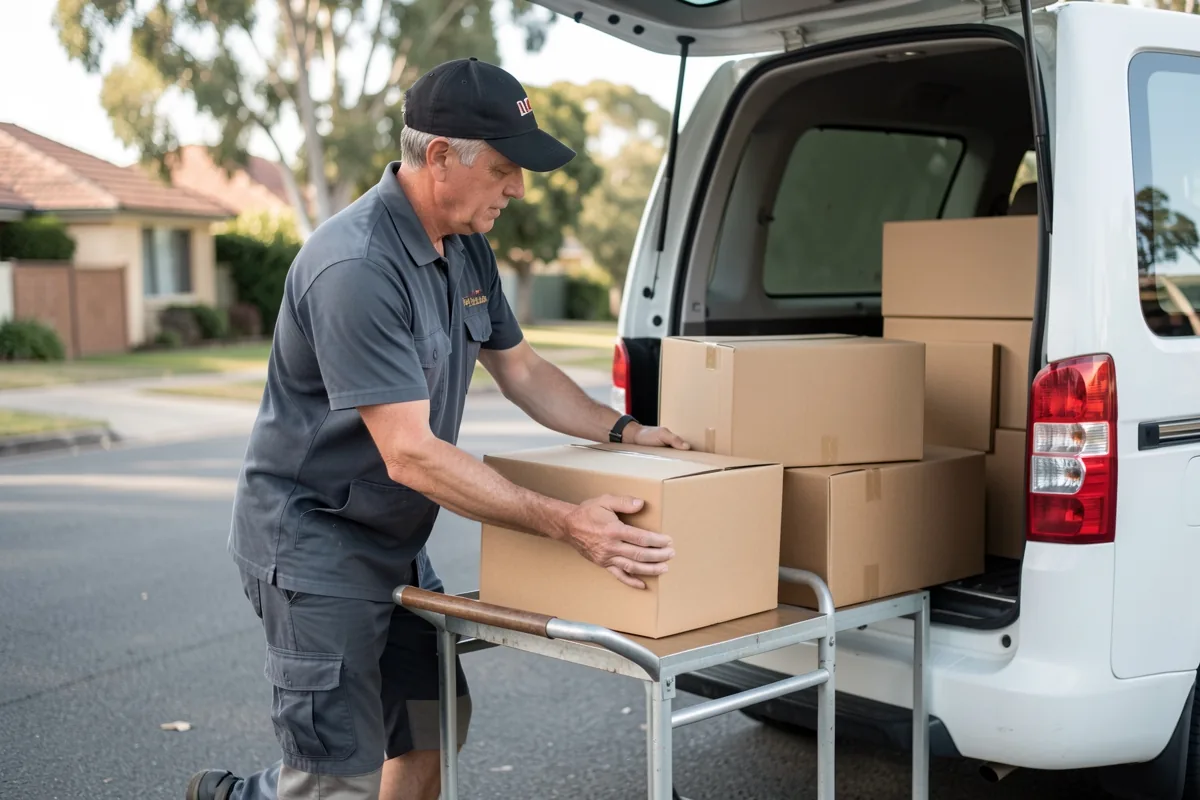
- Loading and unloading vans, trucks and trailers
- Operating tail lifts and kerbside deliveries
- Carrying parcels into homes and businesses
- Sorting parcels on conveyors and ball tables
- Handling bags, drums and long lengths
- Working in cold rooms and freezers
- Repetitive picking to rates and scan targets
Safe manual handling is more than bending your knees
Technique alone is not a reliable control. Managing hazardous manual tasks means working through a risk management process — slotting, aids, layout, rates and staffing — before a carton is ever lifted. This course teaches that process the way the Hazardous Manual Tasks Code of Practice sets it out.
- 1Identifying hazardous tasks and lines
- 2Assessing the task, the rate and the frequency
- 3Testing the load and its weight
- 4Considering the floor, ramps, docks and weather
- 5Using aids — jacks, trolleys, conveyors, lifters
- 6Following site procedures and team-lift rules
- 7Asking for a second person or a machine
- 8Controlling the risk at its source
Four Simple Steps
Learn first, pay last. You can complete the entire training and assessment before making any payment.

Complete the Training
Work through the online modules at your own pace, on any device.
Pass the Assessment
Complete the online multiple-choice assessment. Required score 75%. Unlimited attempts, and a retry only asks about the questions you got wrong.
Enter Your Details and Pay A$49
After passing, enter the information that will appear on your certificate and proceed to secure payment.
Get Your Certificate
After successful payment, access your Certificate of Completion.
Eight Focused Learning Modules
Estimated course duration: approximately 45–60 minutes.
- Module 1
Introduction to Manual Handling in Warehousing and Logistics
6–8 minutes
- Module 2
Australian WHS Principles for Warehousing and Transport
6–8 minutes
- Module 3
Identifying Hazardous Manual Tasks
6–8 minutes
- Module 4
Risk Assessment and the Hierarchy of Controls
6–8 minutes
- Module 5
Safe Movement Principles
5–7 minutes
- Module 6
Lifting, Carrying, Pushing and Pulling Loads
8–10 minutes
- Module 7
Equipment, Aids and Tools for Warehousing and Freight
5–7 minutes
- Module 8
Reporting, Incidents and Ongoing Safety
5–7 minutes

Ready to Take the Assessment?
Complete the training first, then take the online assessment. Pass with 75% or higher to unlock your certificate for A$49.
Unlimited attempts. No subscription. No hidden fees.
Warehouse & Logistics Manual Handling FAQ
No. Australian WHS law does not set a weight limit for lifting. Whether a task is hazardous depends on the risk factors — how heavy the load is, but also how often you lift it, from what height, in what posture, how far you carry it and in what conditions.
Some workplaces set their own guidance figures, for example requiring two people or a mechanical aid above a stated weight. Those are workplace controls, not law, and the course explains how to treat them.
Yes. Module 6 covers pushing versus pulling, starting and stopping loaded pallet jacks and roll cages, floor condition, ramps, dock lips and tail lifts. Module 7 covers pre-use checks and defect reporting for manual and electric pallet jacks, hand trolleys and sack trucks, roll cages, conveyors, scissor lift tables, vacuum lifters and step platforms.
It is theory training. Your site still needs to train you on its own equipment and authorise you to use it.
No. Operating a forklift or order-picking forklift requires a high-risk work licence issued by your state or territory regulator, plus site training. This course does not provide or replace that. It treats forklifts as mechanical aids operated by licensed people, and focuses on the manual tasks that happen around them.
Yes. Many agencies and host sites ask new starters to show manual handling theory training before their first shift, and the course covers what labour-hire and casual workers are owed by both the agency and the host. It does not replace the site induction the host must still give you.
Yes. Loading a van in delivery order, tail-lift operation on slopes, roll cages at the kerb, hand trolleys on stairs, working alone and what to do when a customer premises is unsafe are all covered, along with fatigue and lifting straight after a long drive.
Most learners allow approximately 45–60 minutes across the eight modules. The training and assessment are free to complete; you pay A$49 only if you pass and want the Certificate of Completion.
75% on the 20-question assessment. Attempts are unlimited, and a retry only asks you to revisit the questions you got wrong.
Many logistics employers and labour-hire agencies accept it as evidence of manual handling theory knowledge, alongside their own site induction, equipment training and competency checks. Individual employers set their own requirements, so check with yours if you are unsure.
Every certificate has a unique number that an employer can verify online or by scanning the QR code.
No. Site induction, practical training on the site's own aids, licences where the law requires them, supervision and the site's procedures remain essential. This course gives you the theory those things build on.
No. This is non-accredited online workplace training and issues a Certificate of Completion. It is separate from the nationally recognised HLTWHS005 Conduct manual tasks safely unit and does not provide a Statement of Attainment.
General questions about pricing, verification and accreditation status are answered on the site-wide FAQ.
Related manual handling courses
- Manual Handling Training for Construction and Trades WorkersBuilding sites and trades: heavy and awkward materials, tools and vibration, team lifts, uneven ground and planning the lift before it starts.
- Manual Handling Training for Hospitality and Retail WorkersCafés, kitchens, bars, supermarkets and shops: stock and deliveries, kegs and cartons, shelving, kitchens and repetitive work on your feet.
- Manual Handling Training for Cleaning and Facilities StaffCommercial cleaning, housekeeping and maintenance: carts and bins, mopping and vacuuming, bed-making, chemicals and equipment, repetitive reaching.
Warehouse & Logistics Manual Handling Questions, Answered
Ready to Get Started?
Complete your warehouse & logistics manual handling training online at your own pace.
A$49 certificate after successful assessment.