
Manual Handling Training for Childcare and Early Childhood Educators
Free online training and assessment. Pay A$49 for your Certificate of Completion only when you pass.
- 100% online
- Written for early childhood educators, OSHC and family day care
- Covers lifting and carrying children, cots, change tables and floor work
- Complete at your own pace
- Online assessment included
- Instant certificate after successful completion and payment
Content last reviewed September 2026.
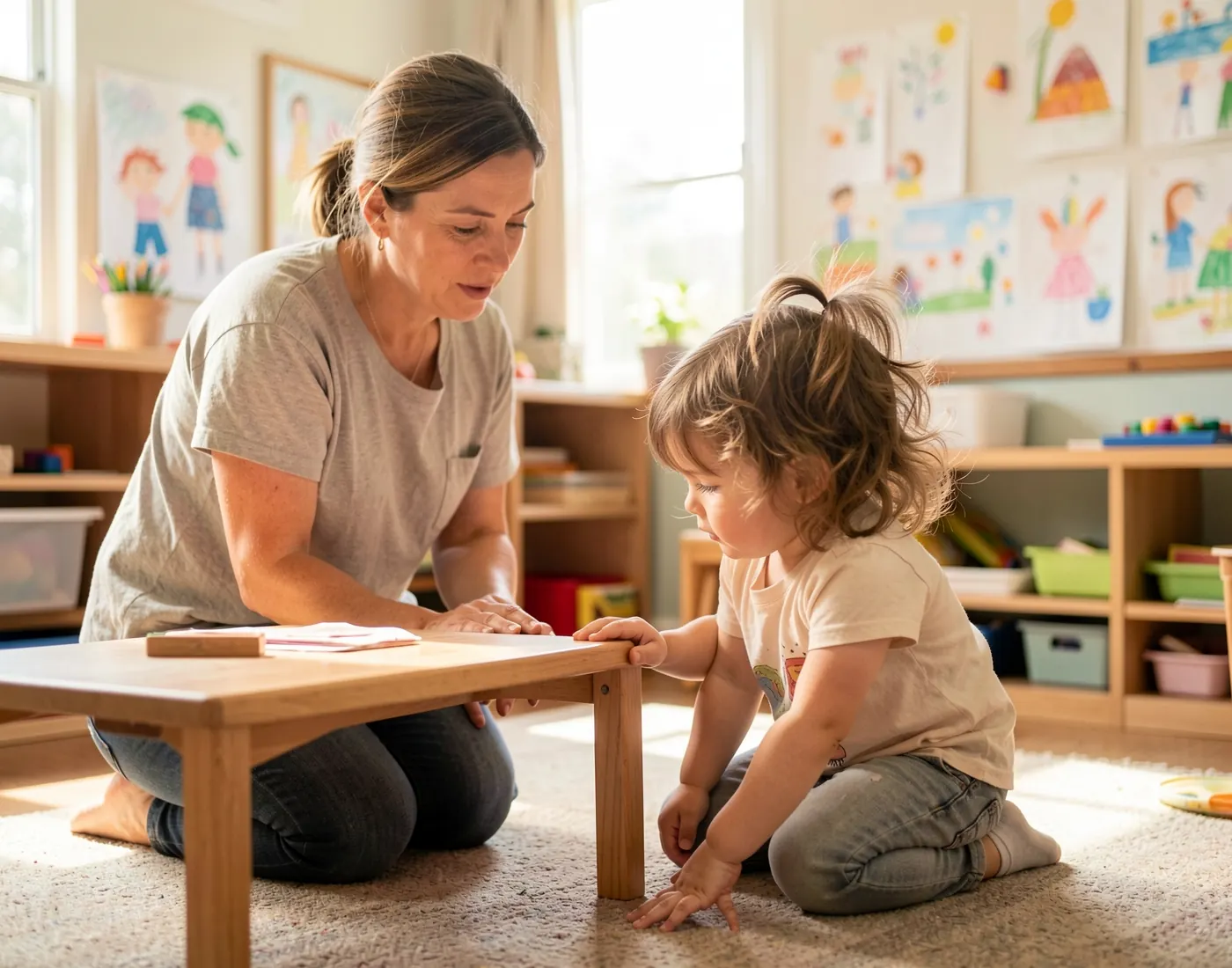
100% Online
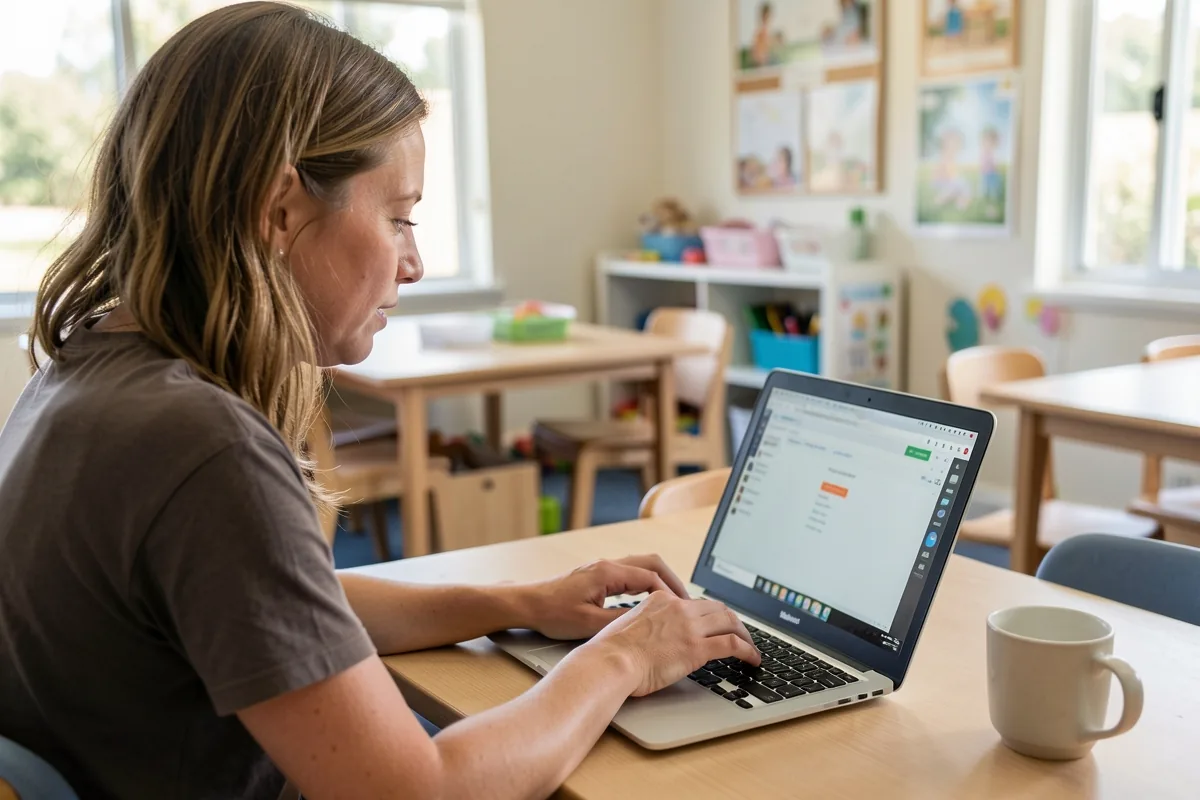
Complete the training on your phone, tablet or computer, between sessions or at home.
Early Childhood Focused
Built around the real manual handling risks of long day care, preschool, OSHC and family day care.
Online Assessment
Demonstrate your understanding through a 20-question final assessment.
Certificate of Completion
Download your certificate after successfully passing and paying A$49.
Who Is This Training For?
This course is designed for people working, or preparing to work, in Australian education and care services — long day care, preschool and kindergarten, outside school hours care and family day care — including students and trainees entering the sector.
Early Childhood Educators
Babies, toddler and preschool rooms in long day care.
Teachers and Kindergarten Staff
Preschool and kindergarten programs, sessional and full day.
OSHC Staff
Before and after school care and vacation care with older children.
Family Day Care Educators
Care delivered in the educator's own home.
Directors and Educational Leaders
Setting up rooms, routines and equipment that reduce the risk.
Cooks and Support Staff
Kitchens, laundry, deliveries and maintenance in a service.
This training supports safe work knowledge. It does not guarantee employment.

Why Manual Handling Matters in Early Childhood Education
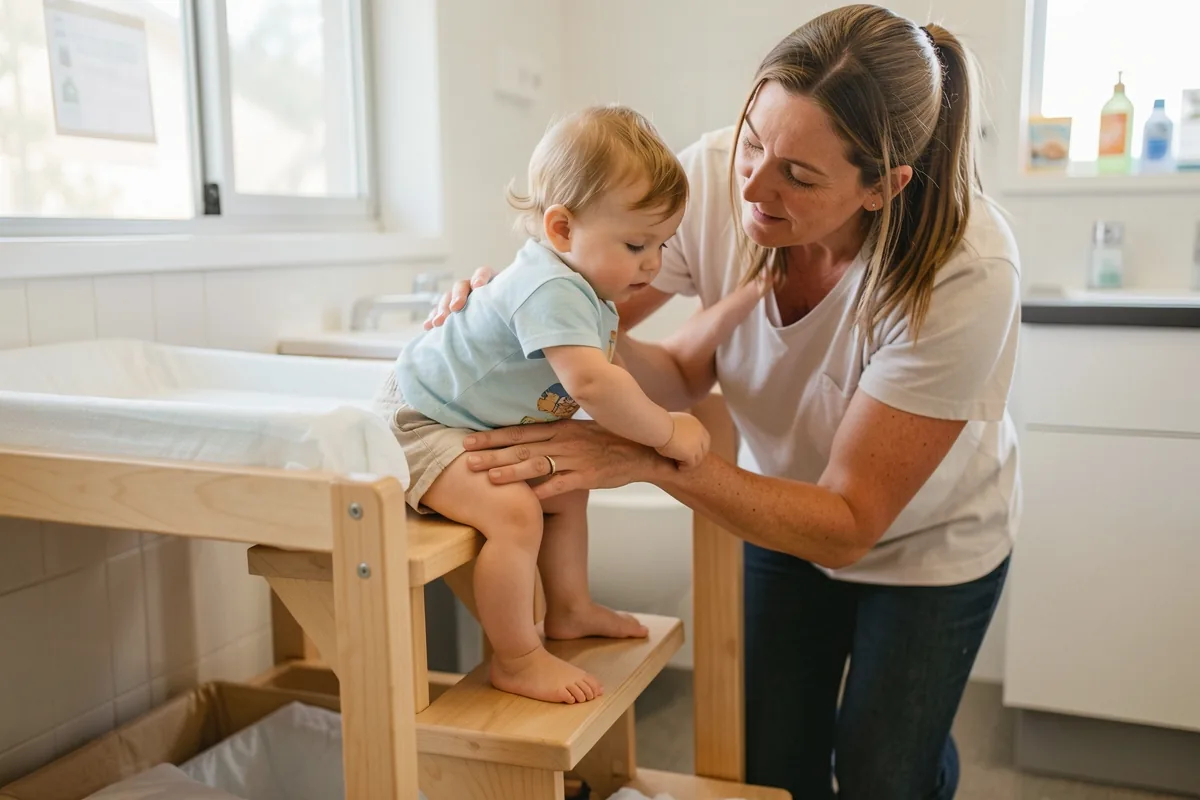
Educators lift, carry, kneel, crouch and reach all day in rooms built for people under a metre tall. No single task looks dangerous. Repeated across a session, a week and a career, poorly controlled hazardous manual tasks are why back, shoulder, knee and wrist injuries are so common in this sector.
- Lifting and carrying infants and toddlers
- Lowering children into and out of cots
- Nappy changing and toileting assistance
- Kneeling and sitting on the floor for long periods
- Working at child-sized tables and chairs
- Lifting children in and out of high chairs and prams
- Pushing multi-seat buggies on excursions
- Settling a distressed or resisting child
- Moving sandpit covers, climbing frames and water troughs
- Carrying stretcher beds, meal trolleys and laundry
- Reaching into high or low storage
Safe manual handling is more than “bend your knees”
Technique alone is not a reliable control when every cot is deep, every table is knee height and every child is lifted twenty times a day. Managing hazardous manual tasks means working through a risk management process — and letting children do what they safely can — before force is ever applied.
- 1Identifying hazards in each room and routine
- 2Assessing the task as it is actually done
- 3Considering the child — age, mobility, mood
- 4Considering the environment — heights, storage, access
- 5Using equipment that removes the lift
- 6Following your service's procedures
- 7Asking for a second educator or a trolley
- 8Controlling the risk and reviewing it
Four Simple Steps
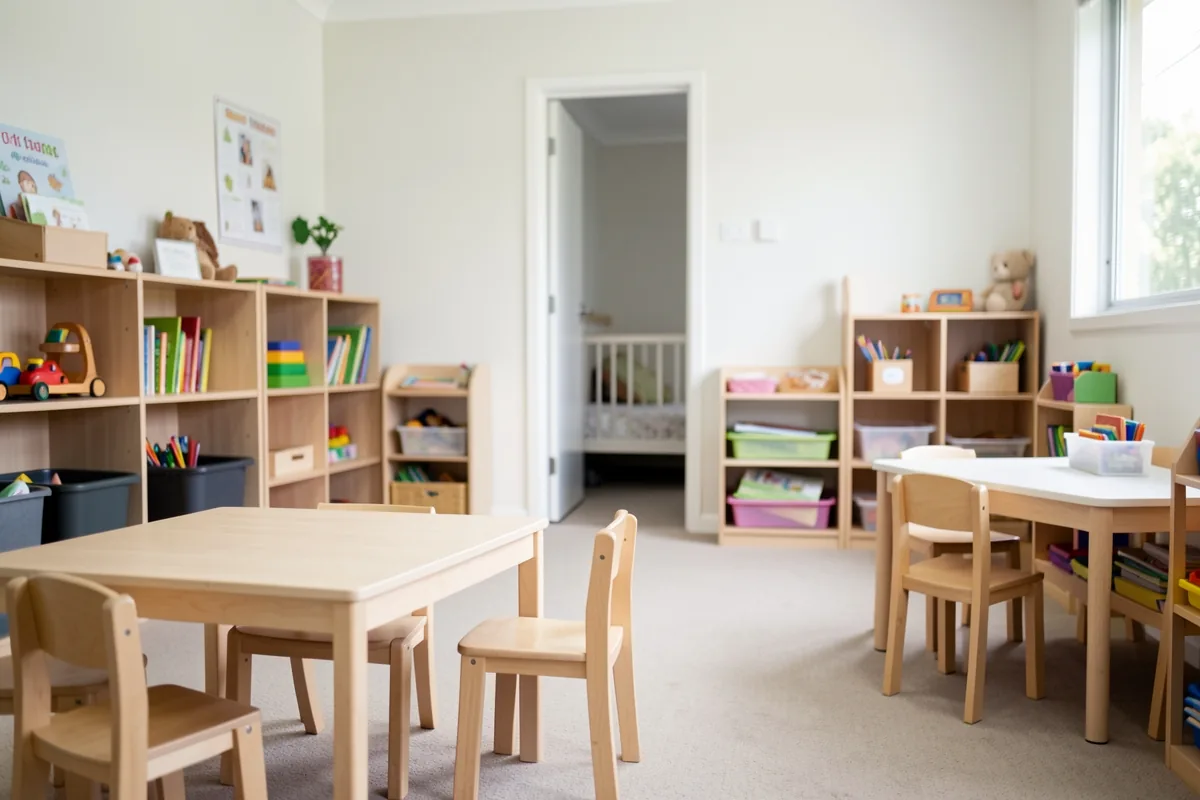
Learn first, pay last. You can complete the entire training and assessment before making any payment.

Complete the Training
Work through the online modules at your own pace, on any device.
Pass the Assessment
Complete the online multiple-choice assessment. Required score 75%. Unlimited attempts, and a retry only asks about the questions you got wrong.
Enter Your Details and Pay A$49
After passing, enter the information that will appear on your certificate and proceed to secure payment.
Get Your Certificate
After successful payment, access your Certificate of Completion.
Eight Focused Learning Modules
Estimated course duration: approximately 45–60 minutes.
- Module 1
Introduction to Manual Handling in Early Childhood Education and Care
6–8 minutes
- Module 2
Australian Work Health and Safety Principles in Education and Care
6–8 minutes
- Module 3
Identifying Hazardous Manual Tasks in Early Childhood Settings
6–8 minutes
- Module 4
Risk Assessment and the Hierarchy of Controls
6–8 minutes
- Module 5
Safe Movement Principles
5–7 minutes
- Module 6
Lifting, Carrying and Working with Children
8–10 minutes
- Module 7
Equipment, Aids and Room Design in Education and Care
5–7 minutes
- Module 8
Reporting, Incidents and Ongoing Safety
5–7 minutes

Ready to Take the Assessment?
Complete the training first, then take the online assessment. Pass with 75% or higher to unlock your certificate for A$49.
Unlimited attempts. No subscription. No hidden fees.
Childcare Manual Handling FAQ
Yes. Module 6 is about lifting and carrying infants and toddlers — secure holds, keeping the child close, the one-hip carry, why two children at once is a problem — and then cots, change tables, high chairs, buggies, floor work, sleep rooms, settling a distressed child and pregnancy.
It is theory training. Your service still needs to show you its own cots, change tables and buggies, and its behaviour guidance and sleep procedures come first.
Yes. The same tasks happen in a family day care residence — cots, change surfaces, prams, floor time, settling — usually without a colleague to share a lift. The course addresses working alone, setting up a home at the right heights, and raising concerns with your scheme co-ordinator.
There is less lifting of children and more furniture and equipment. OSHC staff set up and pack down halls every day — stacked chairs, trestle tables, sports gear, craft tubs — often through doorways and out of store rooms. The modules on hazardous tasks, controls, safe movement, team lifts and equipment apply directly, and the course uses OSHC examples throughout.
Yes. Module 6 explains how pregnancy changes balance, ligaments and fatigue, and what a service should review — fewer lifts, no double carries, no lifting buggies, seated settling. Your own health professional's advice and your service's process always take precedence.
The course is evidence that you have completed manual handling theory. The Education and Care Services National Law and Regulations require safe environments and adequate supervision, and WHS law requires providers to train and instruct workers, but neither names a specific course. Your approved provider decides what training it requires and accepts.
This course is not approved, endorsed or required by ACECQA, any state or territory regulatory authority, or any WHS regulator.
Yes. It assumes no prior training and starts from what a manual task is before moving on to lifting children, room set-up, equipment and reporting.
Many students and trainees take it while studying for their Certificate III or Diploma, or before a placement, to show they understand safe manual handling principles.
Most learners allow approximately 45–60 minutes. The training and assessment are free to complete; you pay A$49 only if you pass and want the certificate.
75% on the 20-question assessment. Attempts are unlimited, and a retry only asks you to revisit the questions you got wrong.
Many providers accept it as evidence of manual handling theory knowledge, alongside their own induction, equipment instruction and supervision. Individual providers set their own requirements, so check with your director or scheme if you are unsure.
Every certificate has a unique number that an employer can verify online or by scanning the QR code.
No. Service-specific induction, instruction on your actual cots, change tables and buggies, the sleep and behaviour guidance procedures, and supervision remain essential. This course gives you the theory those sessions build on.
No. This is non-accredited online workplace training and issues a Certificate of Completion. It is separate from the nationally recognised HLTWHS005 Conduct manual tasks safely unit and does not provide a Statement of Attainment.
General questions about pricing, verification and accreditation status are answered on the site-wide FAQ.
Related manual handling courses
- Manual Handling Training for Disability Support WorkersNDIS, community and in-home support: transfers, hoists and slide sheets, wheelchairs and vehicles, and working alone in a participant's home.
- Manual Handling Training for Office and General Workplace StaffOffices and general workplaces: workstation setup, boxes and archive files, deliveries and stationery, events and the occasional heavy lift nobody planned for.
- Manual Handling Training for Cleaning and Facilities StaffCommercial cleaning, housekeeping and maintenance: carts and bins, mopping and vacuuming, bed-making, chemicals and equipment, repetitive reaching.
Childcare Manual Handling Questions, Answered
Ready to Get Started?
Complete your childcare manual handling training online at your own pace.
A$49 certificate after successful assessment.